

Automotive brake systems
Future EV brake systems must do more than ensure safe stopping; they need to generate energy, reduce particle emissions, and minimize maintenance
Electrification has introduced new challenges, as EVs rely heavily on regenerative braking, which uses the electric motor to recover energy. However, regenerative braking alone cannot handle significant speed reductions, emergencies, or holding a vehicle at a standstill—it must work alongside friction-based braking.
With less frequent use of friction braking in EVs, rust can form on brake components, compromising performance. As a result, friction braking remains essential for safety, even as changing braking behavior drives new material and technology requirements.
Disc brakes
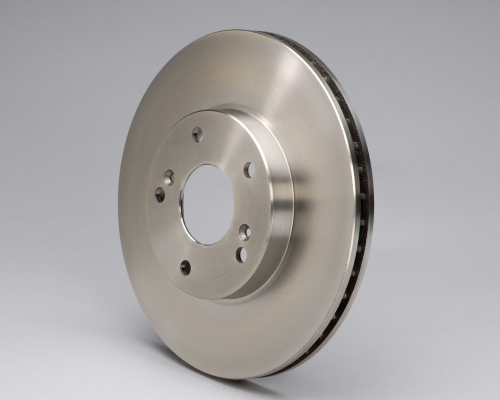
Disc brakes offer superior braking performance, heat dissipation, and comfort compared to drum brakes. They are typically used on all four wheels or at least the front axle in economic cars. The caliper, operated by an actuator or hydraulic connection, transmits force from the brake pads to the disc. While manufacturers explore lightweight materials for disc brake systems, caliper stability is critical for safety. Aluminum is commonly used for caliper housings, while cast iron ensures the necessary strength for thinner anchor components. Low usage can make disc brakes—especially pads and discs—prone to corrosion, reducing braking power after extended inactivity.
EV brake system challenges and solutions
The transition from ICE vehicles to EVs introduces increased requirements and customization trends, such as painted brake calipers. These calipers face challenges with corrosion resistance and paint adhesion.
Backing plates for brake pads
In ICE vehicles, brake pads typically last 2–3 years or 30,000–40,000 km, requiring minimal corrosion protection. In EVs, reduced disc brake usage extends the service life to up to 10 years or 150,000+ km, necessitating advanced corrosion protection for backing plates to ensure durability, visibility, and aesthetics.
Tailored solutions for EV brake components
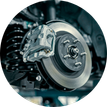
Plated calipers
High-performance cleaners for cast iron, zinc and zinc-nickel electrolytes (Zylite® and Zinni® series), industry-standard passivates (EcoTri® and Tridur® series), and advanced sealers (Sealer 300 W family).
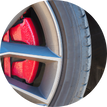
Painted calipers
Specialized passivates, powder or wet primers to enhance paint adhesion.
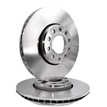
Brake discs
Zinc flake coatings for economic to high-end applications.
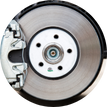
Backing plates
Custom cleaners, zinc and zinc nickel electrolytes, and passivates (EcoTri and Tridur series) to ensure superior corrosion resistance and adhesion.
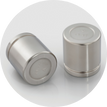
Brake pistons
Electroless nickel or hard chrome coatings for enhanced performance.
Drum brakes: A sustainable choice for EVs
While disc brakes deliver superior performance, EVs’ reduced braking demands—particularly on the rear axle—make drum brakes an attractive option, even for premium vehicles. Drum brakes feature a sealed design, protecting internal components from rainwater and contaminants, resulting in superior corrosion resistance. With a service life of up to 150,000 km, drum brakes provide a low-maintenance and durable solution for EVs. Another advantage is their reduced environmental impact. Disc brakes produce harmful particle emissions through pad abrasion, whereas the closed drum brake system captures particles internally, minimizing environmental release. This makes drum brakes a more eco-friendly alternative amidst global efforts to reduce particle emissions.
Corrosion protection solutions for drum brakes
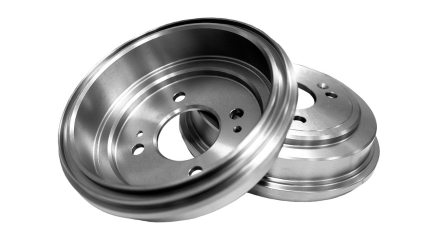
Brake drums
Zinc flake coatings for various applications, from economic to high-end.
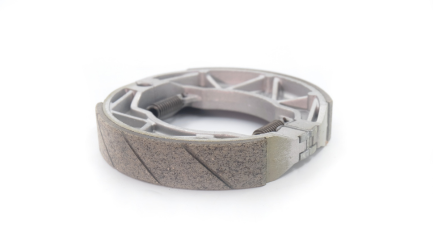
Brake shoes
Specialized cleaners, zinc, and zinc-nickel electrolytes (Zylite and Zinni series) and passivates (EcoTri and Tridur series) for optimal corrosion resistance and adhesion.
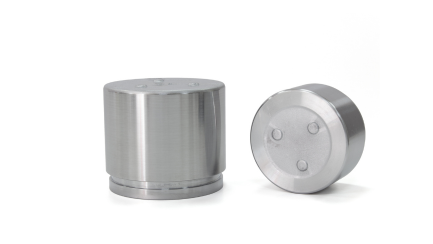
Brake pistons
Electroless nickel or hard chrome coatings for enhanced durability.